


Vacancy Tracker- July 2026
 4 mins read time
 Labour Market
Motor trade vacancies rise while the wider market slips
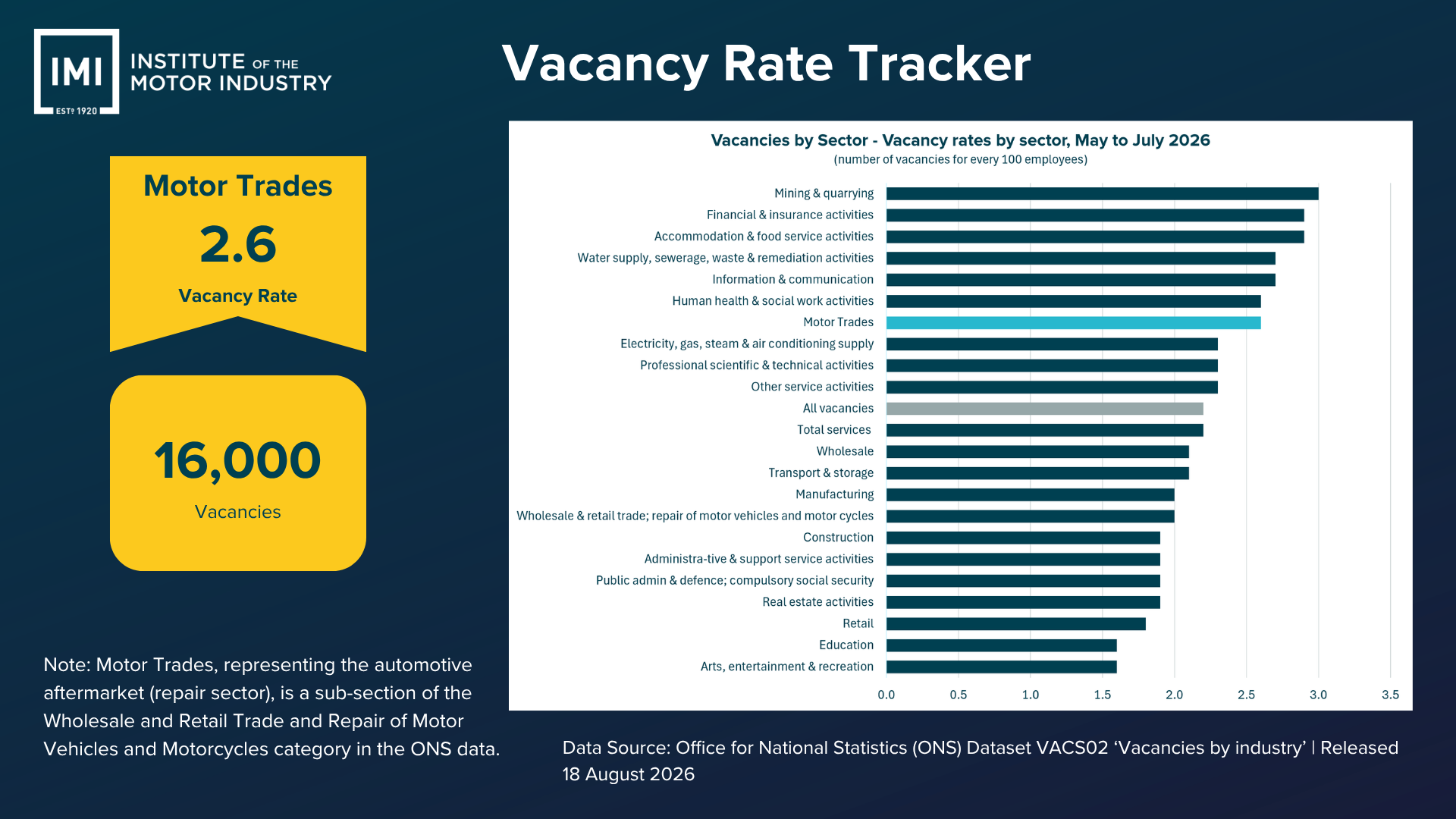
Motor trade vacancies rose to about 16,000 in May to July 2026. In July, online demand increased year on year across all eight automotive occupation groups.
This edition looks at the rebound in vacancy levels, the roles driving it, and the skills employers asked for most often.
At a glance
- Vacancy rate: 2.6
- UK industry rank: joint sixth out of 23
- Approximate open positions: 16,000
- Change from previous reporting period: +14%
- Year-on-year: broadly unchanged
- Two-year change: -24%
Key Insight
Motor trade vacancies rose in the latest reporting period, while total UK vacancies fell slightly. However, the sector still recorded around one-quarter fewer vacancies than two years ago.
Vacancy levels show renewed activity
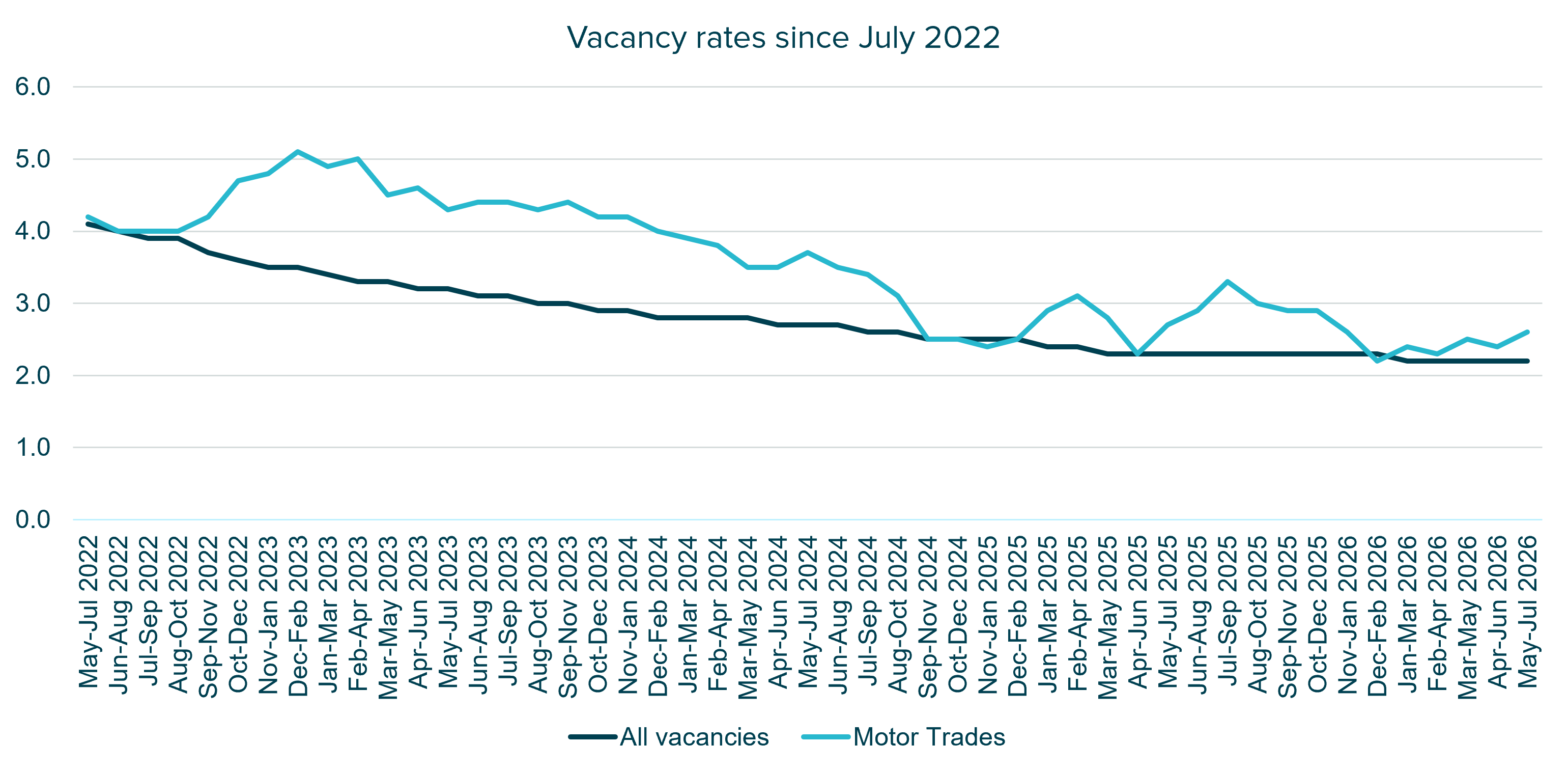
Motor trade vacancies rose from around 14,000 in April to June to 16,000 in May to July, an increase of approximately 14%. Over the same rolling-period comparison, vacancies across all industries fell by around 1%.
Motor trade vacancies were broadly unchanged from the same period last year but were 24% below July 2024.
Motor Trades climb back into the top six
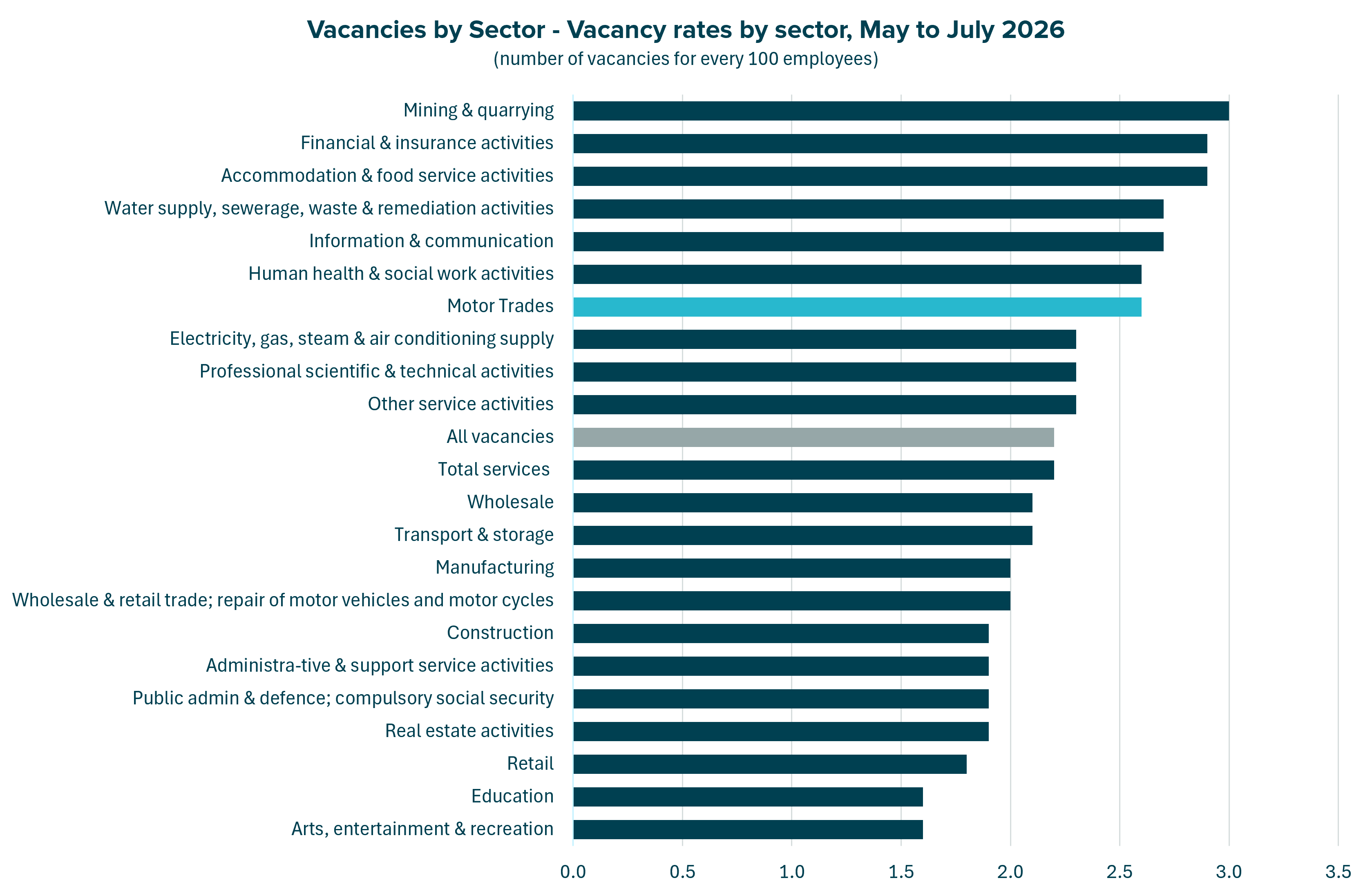
Motor trades recorded 2.6 vacancies per 100 employee jobs, placing the sector joint sixth among 23 UK industries, alongside human health and social work.
The sector moved from joint seventh in April to June to joint sixth in May to July, matching its position in March to May. Across all industries, the vacancy rate has remained at 2.2 since the start of 2026.
Construction’s vacancy rate fell from 2.1 to 1.9, showing that the rise in motor trade vacancies was not shared across the labour market.
The sectors with the highest vacancy rates were:
- Mining & quarrying
- Financial & insurance activities
- Accommodation & food service activities
Motor trade vacancies rose while the wider market edged down, moving the sector back to joint sixth for vacancy rates
Occupation demand
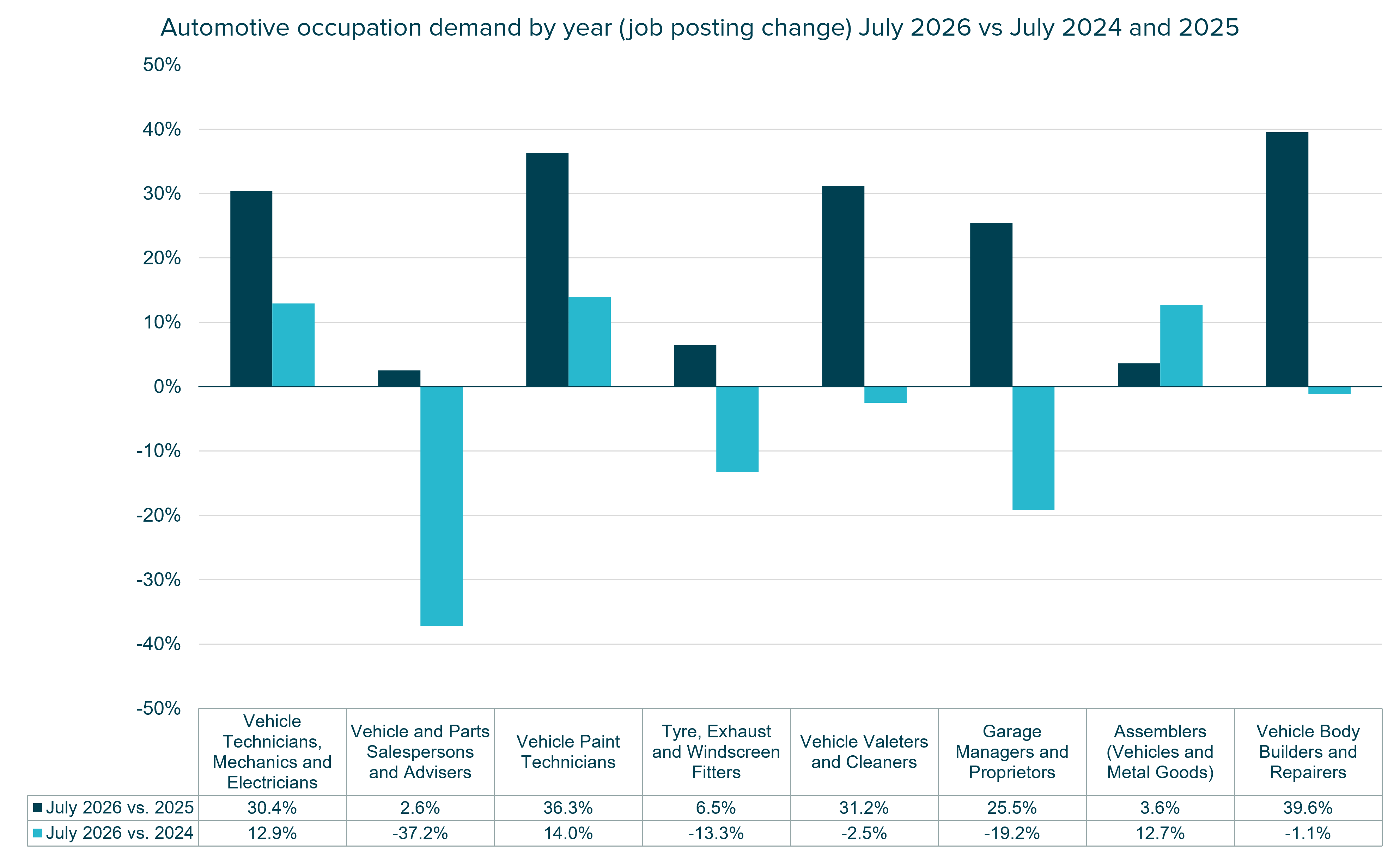
After a mixed July 2025, online postings rose year on year across all eight automotive occupation groups. The vehicle technicians, mechanics, and electricians occupation group accounted for 73% of tracked postings. Demand for this group increased by 30%.
Roles in demand
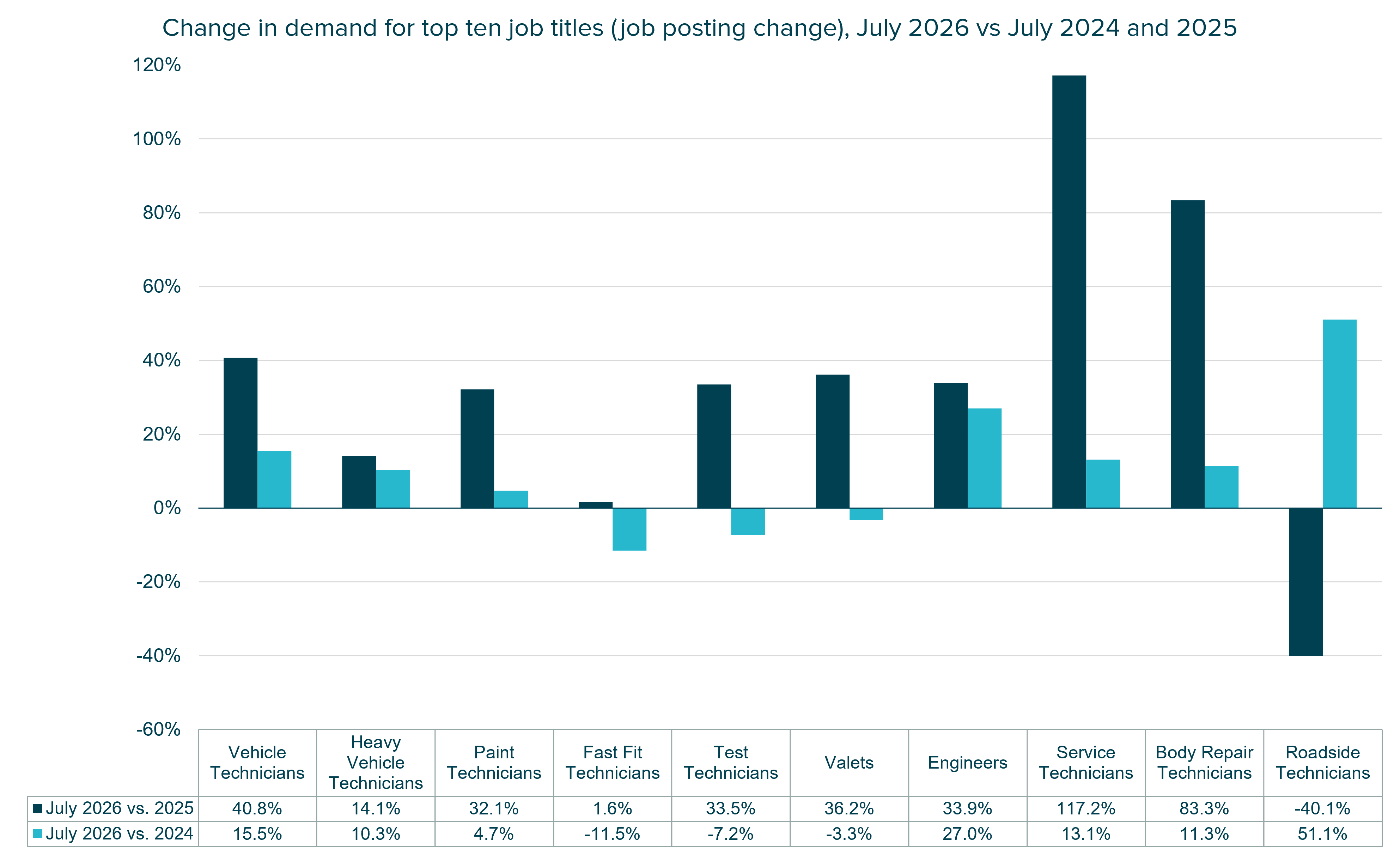
Vehicle technicians remained the leading job title, accounting for 46% of July postings. Demand rose by 41% year on year.
Heavy vehicle technicians accounted for 16% of postings. Demand rose 14% year on year and by approximately 26% over two years. HGV and bus technicians and heavy diesel fitters made up 98% of this group.
The latest IMI Education Report shows a similar pattern. Heavy Vehicle was one of only two certification pathways to grow in every quarter of 2025. It also recorded the strongest growth among the major automotive apprenticeship standards.
Vehicle technicians accounted for 46% of July postings, with demand rising 41% year on year.
Body repair technician postings rose 83% year on year and more than doubled compared with July 2024. In contrast, roadside technician postings fell 40%, led by a 48% fall for mobile repair specialists.
Overall, eight of the ten leading job titles recorded year-on-year growth.
EV demand
The number of postings asking for EV experience rose by 131% to 207. This was the third consecutive July increase, with employers most often asking for high-voltage and electric vehicle repair skills.
However, the rise in job advertising does not resolve the longer-term training challenge. The latest EV TechSafe Technician Forecast projects a shortfall of more than 43,000 EV-qualified technicians by 2035.
Demand for EV experience more than doubled, but the UK still faces a projected shortfall of over 43,000 EV-qualified technicians by 2035.
Skills
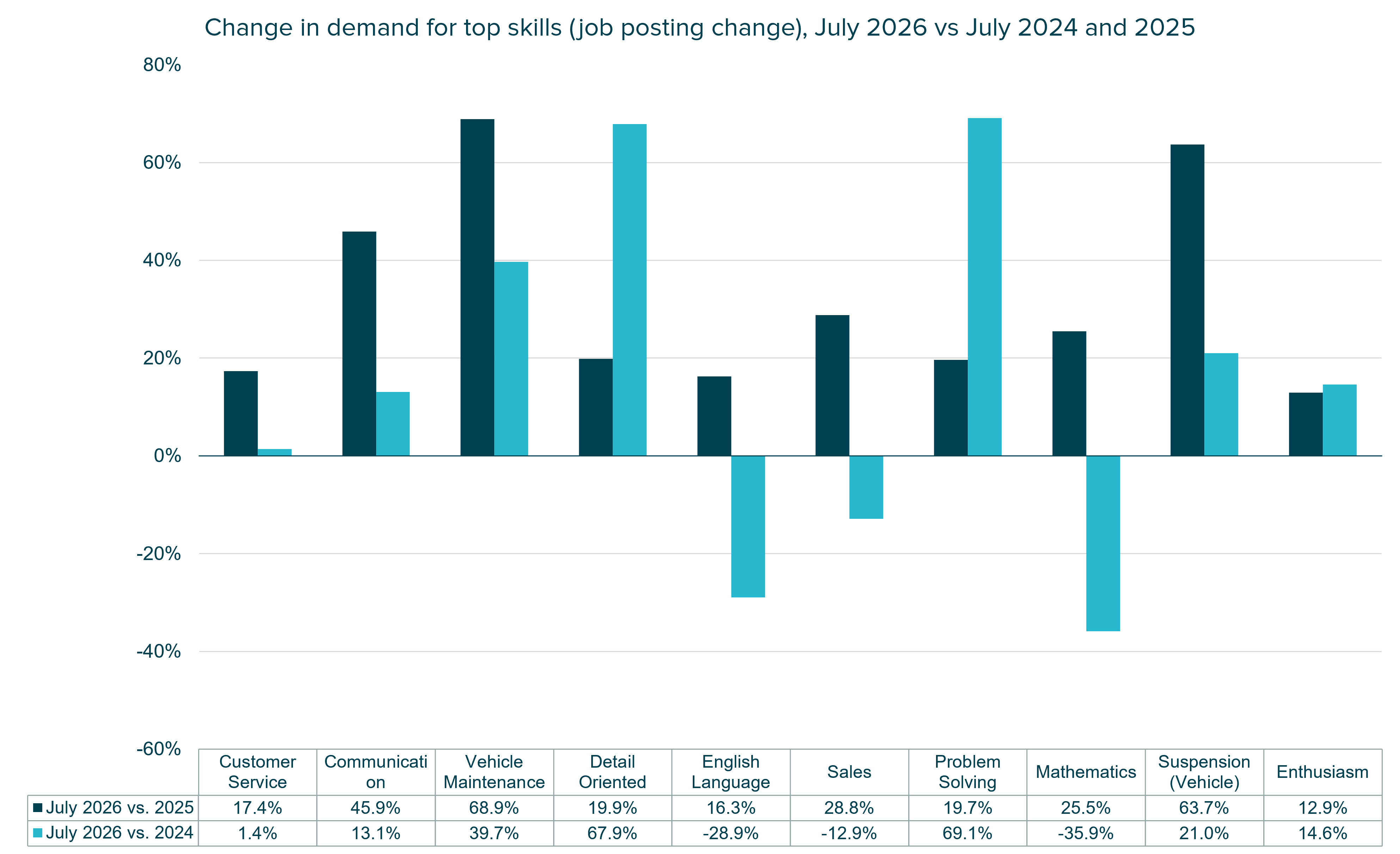
All ten skills tracked recorded year-on-year growth. Vehicle maintenance rose by 70%, equipment maintenance by 64%, and communication by 46%.
Customer service was the most asked for skill, appearing in more than 7% of postings and rising by 17%. English language and maths also returned to growth after declining between July 2024 and July 2025.
Employers are asking for both maintenance skills and clear communication. Technical skills grew fastest, but customer service was central to many roles.
July in summary
July shows a broader rebound than the previous tracker. Vacancy levels rose, all eight occupation groups recorded year-on-year growth, and demand increased most for maintenance and workshop skills.
However, the sector still has around one-quarter fewer vacancies than two years ago. The figures point to a recovery in recruitment demand, not a return to earlier levels.
Data sources
This report combines vacancy data from the Office for National Statistics (ONS) with online job advertisement data from Lightcast.
Vacancy rates represent vacancies per 100 employee jobs. Lightcast data reflects online recruitment activity and may not capture all vacancies.

Share this Page


