


Vacancy Tracker - September 2026
 4 mins read time
 Labour Market
Motor trade recruitment strengthens as UK vacancies fall
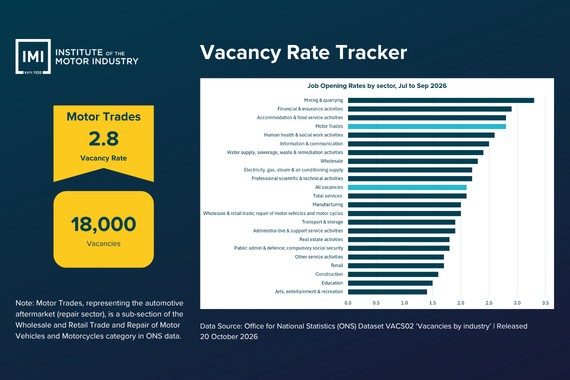
Estimated motor trade vacancies rose for a third consecutive rolling period, reaching around 18,000 in July to September 2026. Across the UK economy, vacancies fell to 691,000.
The motor trade job openings rate stayed at 2.8%, the joint third-highest among UK industries. The rate measures vacancies as a share of all jobs, both filled and unfilled.
At a glance
- Motor trades job openings rate: 2.8%
- UK industry rank: joint third out of 23
- Vacancies in July to September 2026: around 18,000
- Change from the previous reporting period: +6%
- Change from July to September 2024: -5%
Vacancy levels rise for a third period
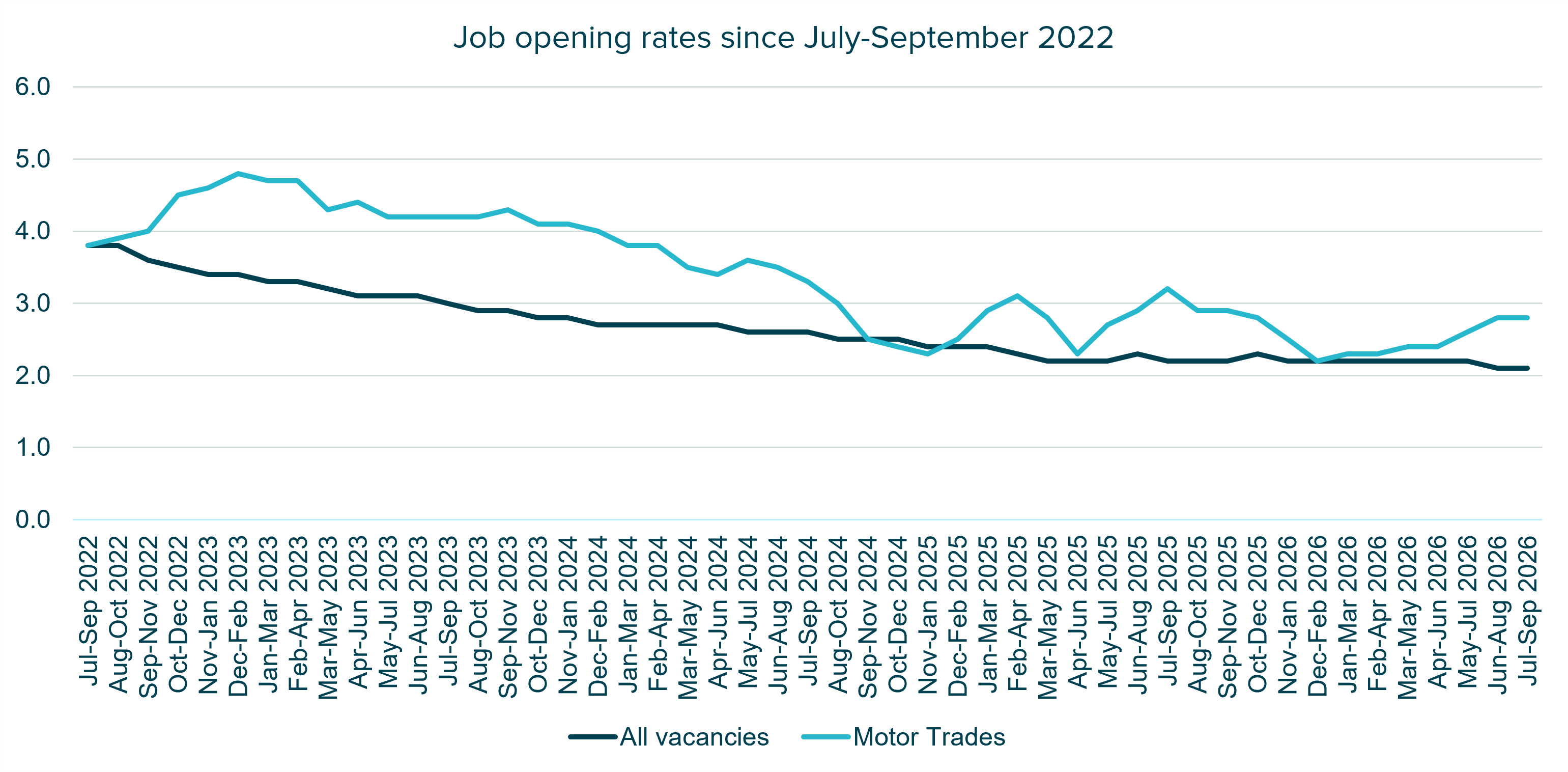
There were around 18,000 motor trade vacancies in July to September 2026, compared with 17,000 in June to August. Over the same periods, UK vacancies fell from 704,000 to 691,000.
The motor trade estimate has now increased across three consecutive periods, from 15,000 in April to June to 18,000 in July to September.
Motor trade vacancies have fallen less sharply over the past two years. They were 5% lower than in July to September 2024, while vacancies across the UK economy dropped by 18%. Both were 5% lower than a year earlier.
Motor trades are still among the highest-ranked
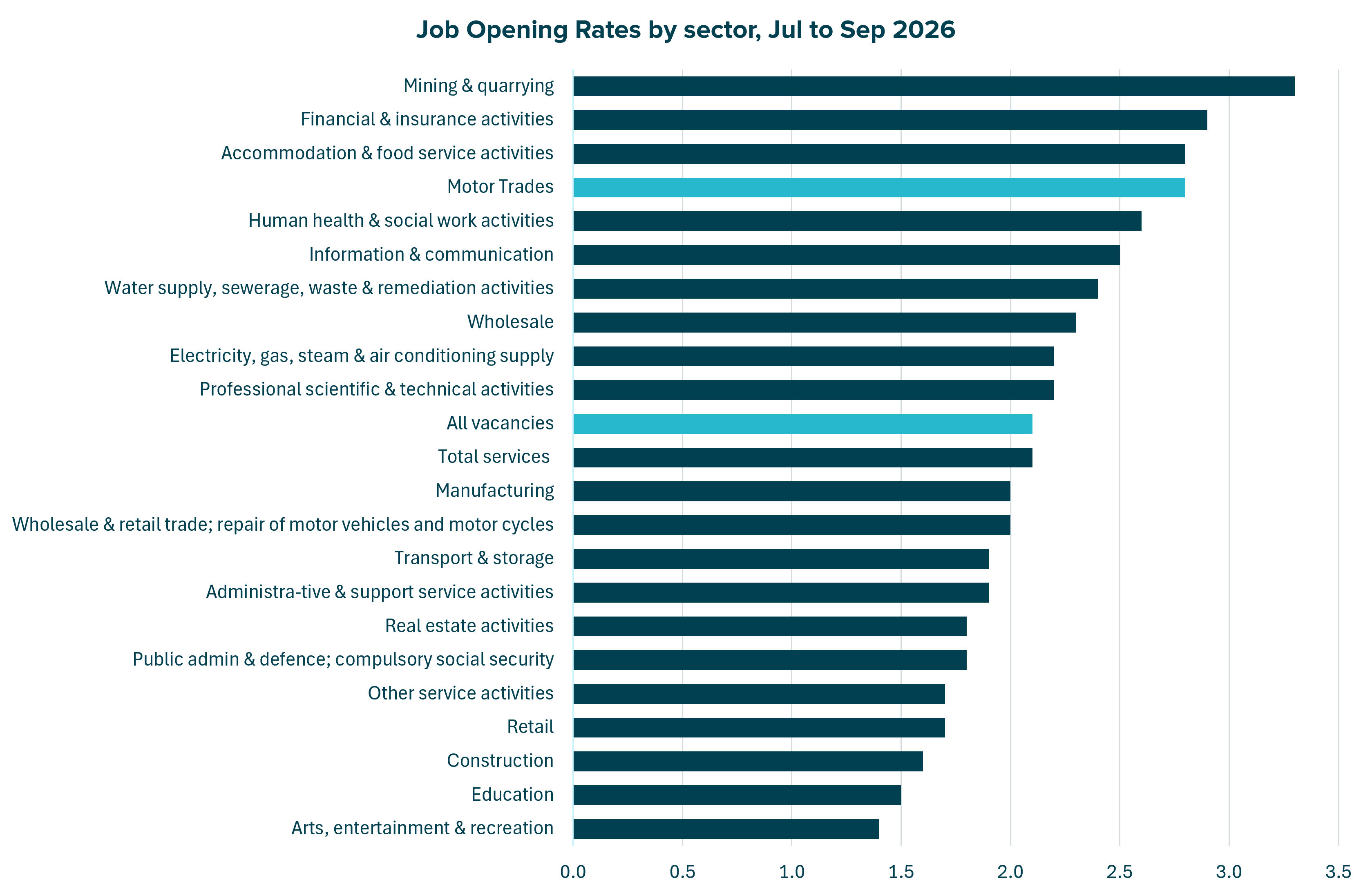
The motor trade job openings rate stayed at 2.8%. This matched accommodation and food service activities and placed motor trades joint third among 23 industries. Only mining and quarrying, at 3.3%, and financial and insurance activities, at 2.9%, recorded higher rates.
Motor trade vacancies rose to around 18,000 as the UK total fell to 691,000
At 2.8%, the motor trade job openings rate was 0.7 percentage points above the rate across all industries. This means that a larger share of motor trade jobs was vacant, although the rate does not explain why vacancies were open or how difficult employers found them to fill.
Job postings increase across most occupations
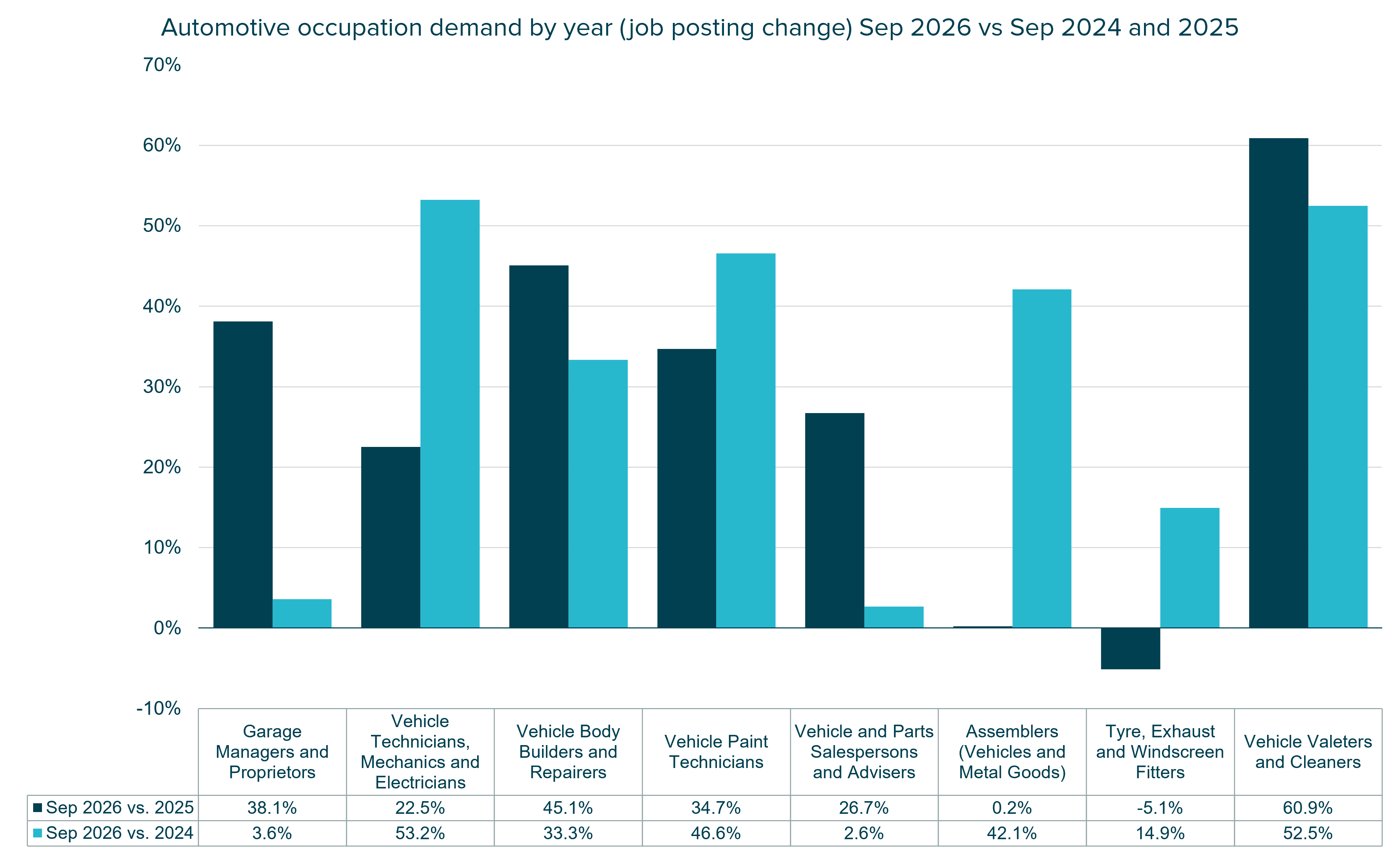
Automotive online job postings in September were 23% higher than in September 2025 and 43% above September 2024. Seven of the eight occupation groups grew year on year, and all eight recorded more adverts than two years earlier.
Vehicle technicians, mechanics, and electricians accounted for 72% of the adverts. The group recorded 19,734 adverts, 23% more than a year earlier and 53% more than in September 2024.
Automotive job adverts rose by 23% year on year, with increases across seven of the eight occupation groups tracked
Vehicle valeters and cleaners recorded the fastest annual growth, at 61%. Adverts also increased by 45% for vehicle body builders and repairers, 38% for garage managers and proprietors, and 35% for vehicle paint technicians.
Demand for tyre, exhaust, and windscreen fitters fell in the latest year but stayed above its 2024 level. Job postings were 5% lower than in September 2025, but 15% higher than in September 2024. So the latest fall only partly reversed the growth recorded a year earlier.
Demand grows across several technical job-titles
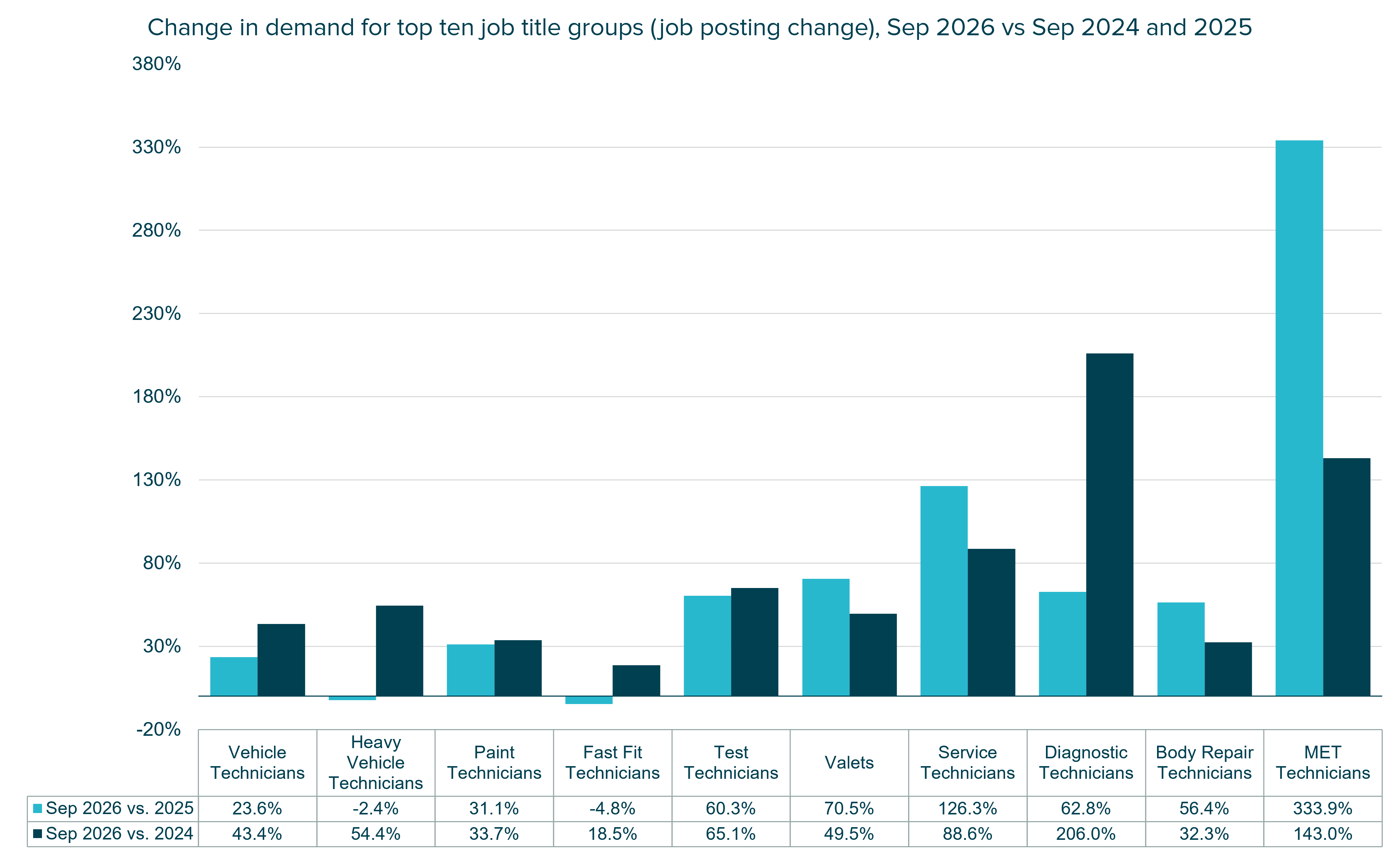
Vehicle technicians were the largest of the selected job-title groups, with 11,382 adverts. This was 24% more than a year earlier and 43% more than in September 2024.
Heavy vehicle technician adverts fell by 2% year on year, but were 54% above September 2024. HGV technician and HGV mechanic titles made up 97% of this group. Despite the annual fall, heavy vehicle technician postings were still 54% above September 2024.
Vehicle technicians were still the largest group, while postings for diagnostic and test technicians rose by more than 60%
Employers are recruiting across inspection, testing, diagnosis, and repair, but vehicle technician roles still account for the largest number of postings. This indicates that training needs to cover a wider range of specialist skills while keeping vehicle technician development at their core.
Technical and customer-facing skills rise together
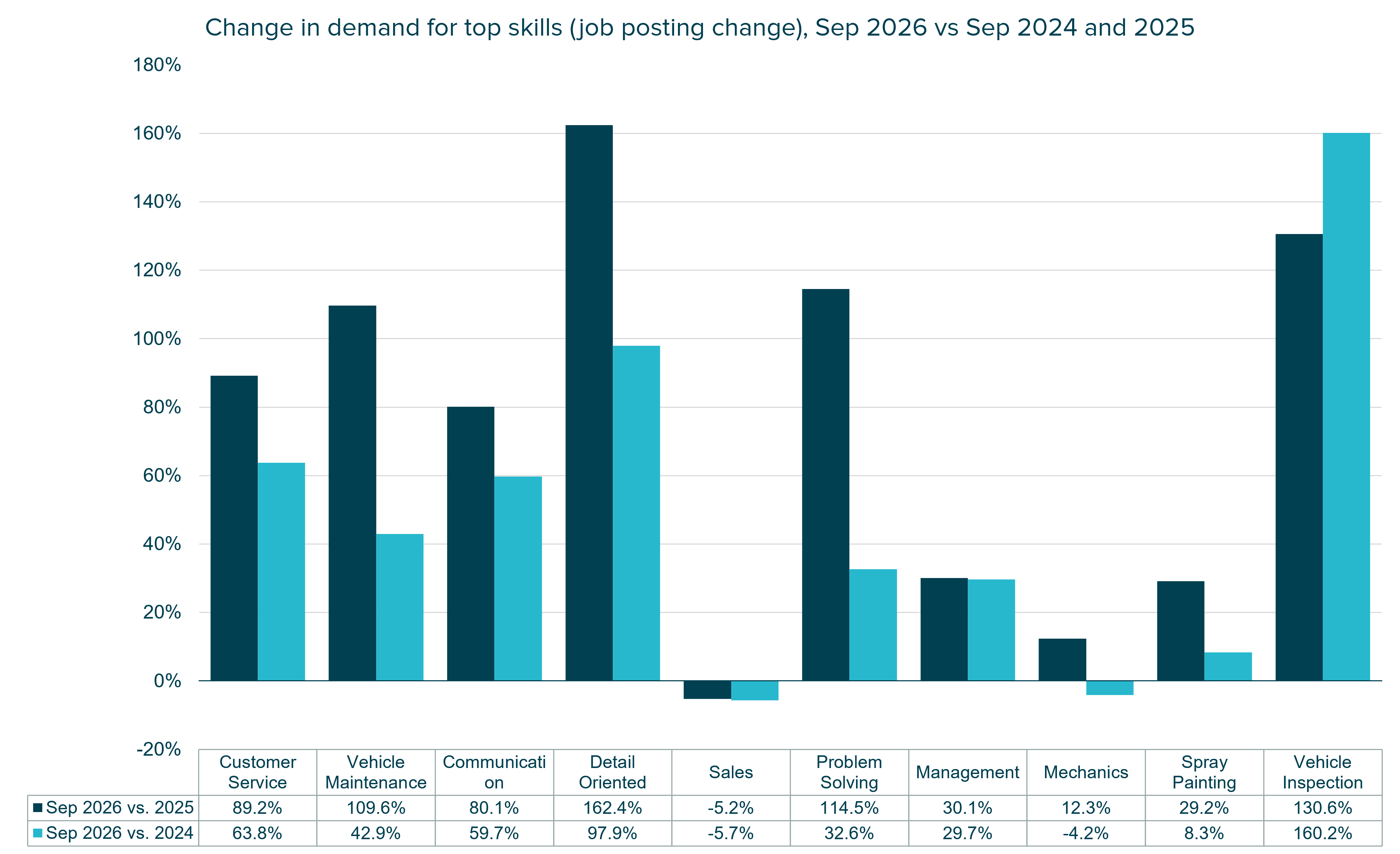
Vehicle maintenance appeared in 8,004 adverts, making it the most requested skill in the data. Customer service followed closely, appearing in 7,968 adverts. Mentions increased by 43% and 64%, respectively, compared with September 2025.
Eight of the ten skills recorded year-on-year growth. Vehicle inspection increased by 160%, attention to detail by 98%, communication by 60%, and problem solving by 33%. Sales and management were the only two to decline, by 6% and 4%, respectively.
Demand grew for both technical and customer-facing skills. Vehicle maintenance was still the most requested skill, while customer service mentions rose faster year-on-year.
Electric vehicle skills
Combined mentions of the six skills tracked for electric vehicle (EV) work rose from 1,353 to 2,329, an increase of 72%. This was 151% higher than in September 2024.
‘Electric Vehicles’ was the most common EV-related term, appearing in 836 adverts, more than twice the number recorded a year earlier. Mentions of electrical diagnostics and repairs increased by 71%, while electrical systems rose by 39%.
Mentions of the six EV-related skills tracked rose by 72%, three times the increase in automotive postings overall
The increase was faster than the 23% rise in automotive adverts overall, suggesting that EV-related capabilities are becoming more prominent in advertised skill needs.
The IMI's EV TechSafe Technician Forecast projects a shortfall of more than 43,000 EV-qualified technicians by 2035. The rise in postings mentioning EV skills reinforces the need to develop these skills among new entrants and existing technicians.
September in summary
Motor trade recruitment activity strengthened in the latest data. Estimated vacancies rose for the third consecutive period to around 18,000, while online automotive job postings were 23% higher than in September 2025. Seven of the eight occupation groups recorded annual growth, and mentions of the six tracked EV skills rose by 72%.
Demand did not rise across every measure or role. Motor trade vacancies stayed 5% below a year earlier, while postings fell for heavy vehicle technicians and tyre, exhaust and windscreen fitters. The figures point to firmer recruitment demand overall, with clear differences between occupations.
Data sources
This report combines vacancy data from the Office for National Statistics (ONS) with online job advertisement data from Lightcast. The job openings rate measures vacancies as a percentage of all jobs, including filled and vacant jobs.

Share this Page