


Automotive Education Report Edition 17
 7 mins read time
 Learners

Automotive skills supply is still substantial, but growth is uneven. Certification activity fell sharply in Q4, apprenticeship recruitment remained broadly stable, and EV and ADAS training continued to grow more slowly than projected demand.
The Automotive Education Report tracks qualification certificates across the UK and apprenticeship starts in England. Edition 17 analyses qualification data for Q4 2025 and apprenticeship starts from the first three quarters of the 2025/26 academic year.
At a glance
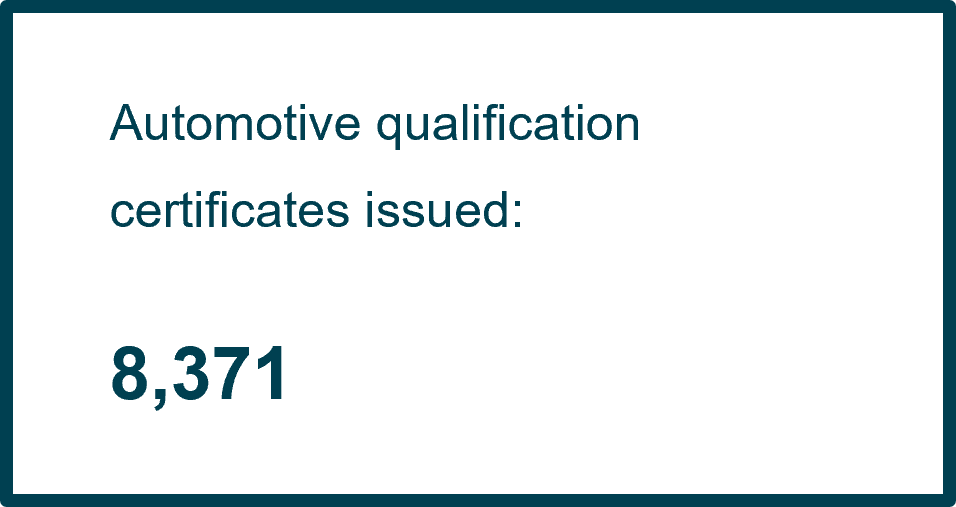
- 8,371 automotive certificates issued, down 6% year-on-year
- Electric and Hybrid pathway was the largest, with 3,680 certificates
- 74,734 EV-qualified technicians, with a projected shortfall of more than 43,000 by 2035
- 10,695 ADAS-qualified technicians, representing around 3% of the workforce
- 7,424 apprenticeship starts in Q1 to Q3, down 1% year-on-year
- Heavy Vehicle apprenticeship starts rose by 35% year-on-year
- Starts on the wider T Level pathway rose by 10% year-on-year
Automotive certification activity fell sharply in Q4
Automotive certificate volumes weakened more sharply than the wider qualifications market.
Awarding organisations issued 8,371 automotive certificates in Q4 2025. This was 67% fewer than in the previous quarter and 6% fewer than in Q4 2024. Across all sectors, certificate volumes fell by 1.2% year-on-year.
Level 3 is still the largest part of the automotive qualifications profile, accounting for 61% of certificates. Level 2 accounted for 23%.
Electric and hybrid was the largest pathway, with 3,680 certificates and 44% of activity. However, volumes fell slightly from 3,826 in Q3. Its increased share reflects much sharper falls in light vehicle and general maintenance certificates.
Electric and hybrid became more prominent because other pathways fell faster, not because certificate volumes increased.
Certification cycles are likely to have influenced these quarterly movements. Heavy Vehicle and ADAS were the only pathways to grow in every quarter of 2025.
Scotland was the only UK nation to record year-on-year growth, with certificate volumes rising by 13%. England recorded a 4% decline, while Wales fell by 35% and Northern Ireland by 70%. However, smaller totals outside England mean that changes in timing can have a greater effect on quarterly comparisons.
EV and ADAS skills are growing too slowly
The number of qualified technicians continues to rise, but training is not keeping pace with the future workforce needed to support electric vehicles, ZEV Mandate, and ADAS.
The latest EV TechSafe Technician Forecast reports that the UK has 74,734 EV-qualified technicians, with a projected shortfall of more than 43,000 technicians by 2035.
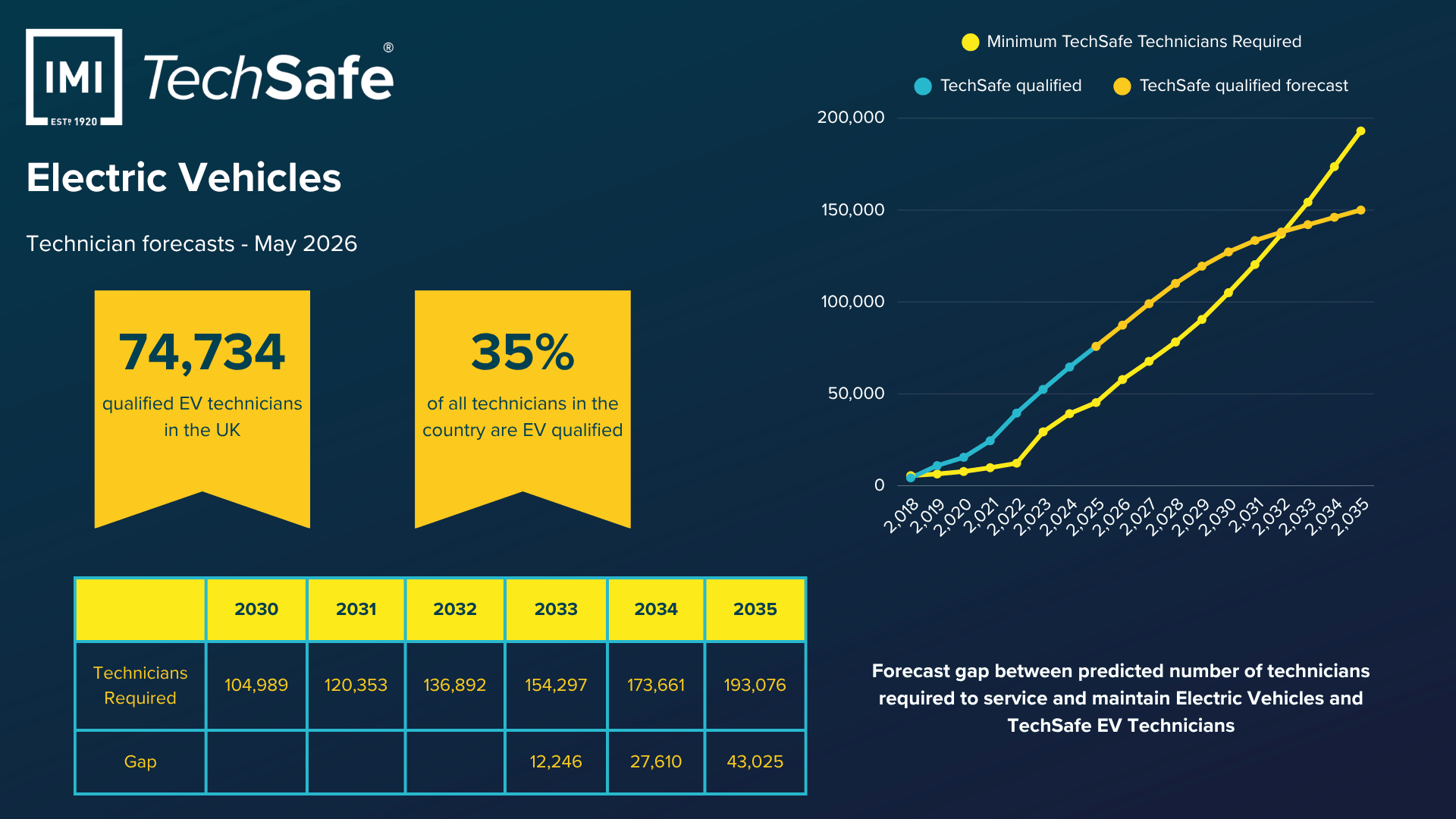
The government’s review of the ZEV Mandate may change the timing of demand for EV-qualified technicians. However, it does not reduce the need to expand training before shortages appear.
ADAS presents a larger workforce challenge. Our latest ADAS TechSafe Technician Forecast, reports that the UK has 10,695 technicians with an ADAS TechSafe-eligible qualification, representing around 3% of the technician workforce.
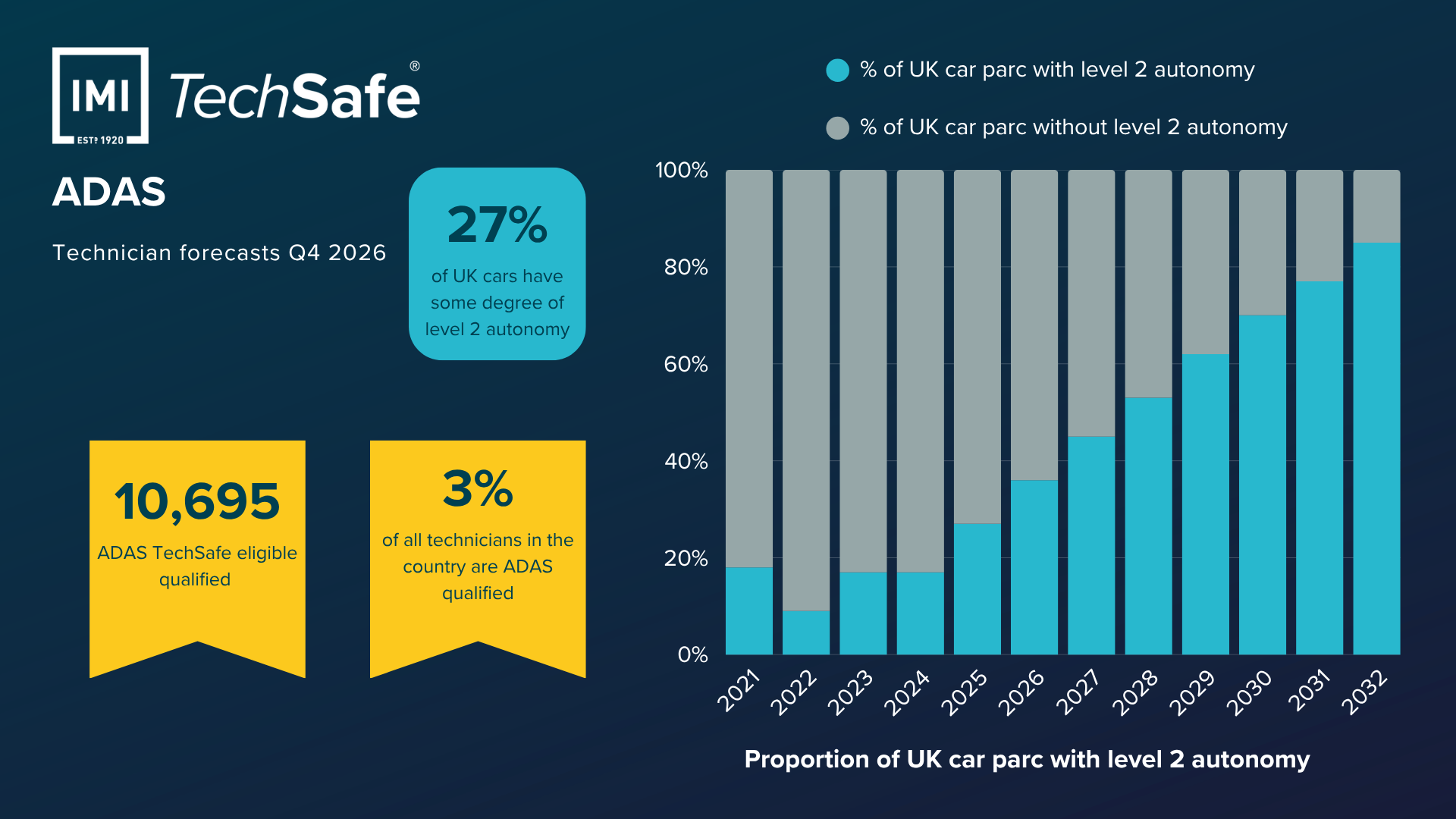
By 2032, approximately 85% of the UK car parc could have Level 2 driver assistance. The sector may need more than 220,000 ADAS-qualified technicians by then. By 2035, the projected shortfall could exceed 190,000.
Technician numbers are growing. The challenge is whether training can accelerate fast enough to meet demand.
Apprenticeship recruitment remains stable at a lower level
Automotive recruitment improved in Q3 but starts across the first three quarters remained 1% below last year. The wider apprenticeship market grew by 8% over the same period.
Employers recorded 1,128 automotive apprenticeship starts in Q3 2025/26. This was 20% fewer than in Q2 but 8% more than in the same quarter a year earlier.
Across the first three quarters, employers recorded 7,424 starts. This was 1% fewer than in 2024/25, while apprenticeship starts across all subjects increased by 8%.
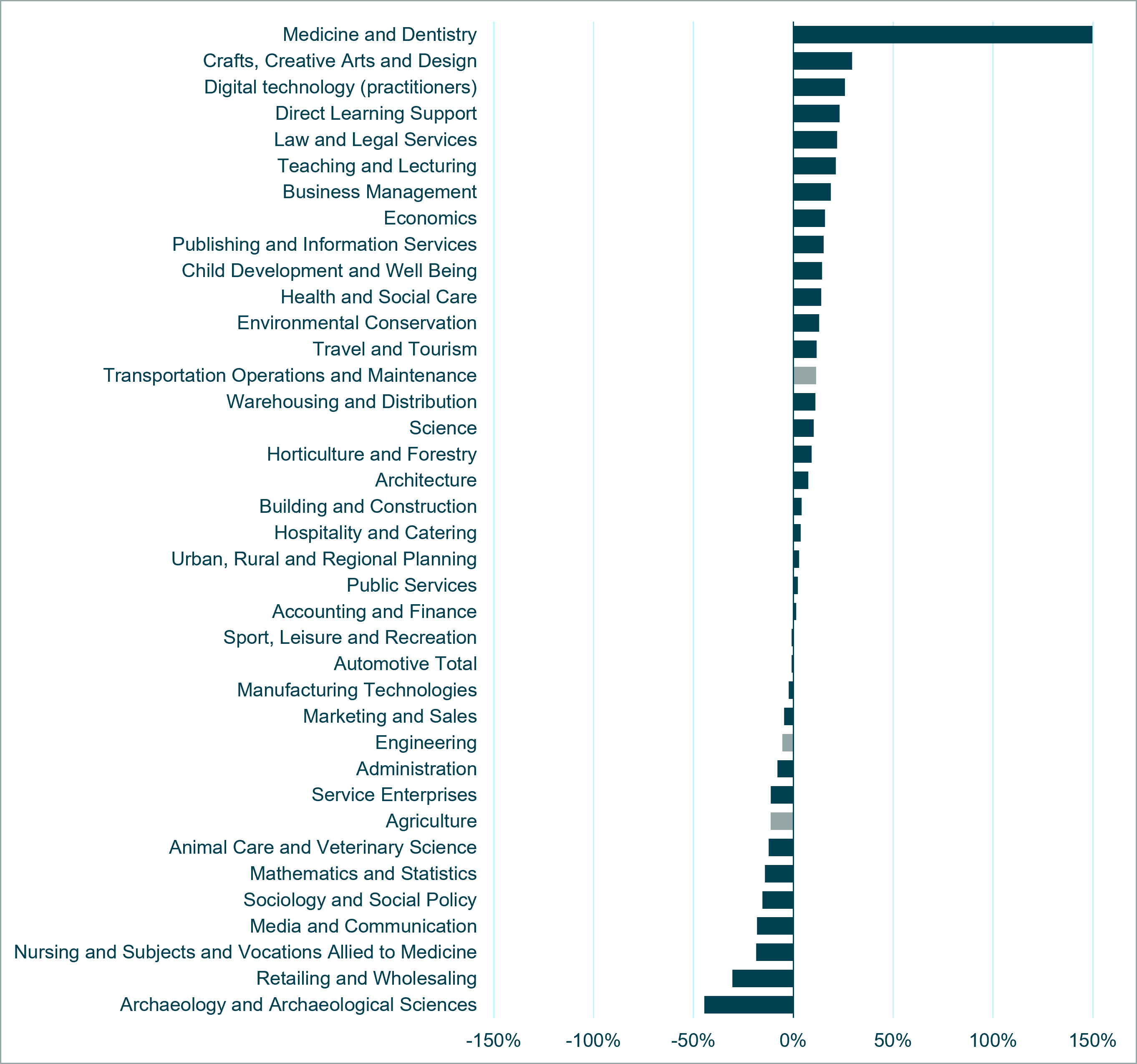
Automotive ranked 12th out of 38 subject areas by total starts but 25th for year-on-year growth. Its share of all apprenticeship starts fell from 2.6% to 2.3%.
Automotive remains a large apprenticeship subject, but stable recruitment means it is losing ground as the wider market expands.
Recruitment is becoming more concentrated
Stable overall recruitment masks a shift towards the three largest standards. Heavy Vehicle and Autocare grew, while several smaller and specialist routes contracted.
Light Vehicle remained the largest standard, with 2,753 starts, although this was 5% fewer than a year earlier. Autocare starts increased by 10% to a series high of 1,845.
Heavy Vehicle recorded the strongest growth among the major standards. Starts rose by 35% to a series high of 1,379, increasing its share of automotive apprenticeship starts from 14% to 19%.
T Levels could support the automotive skills pipeline
Starts on the wider Maintenance, Installation and Repair pathway rose by 10% to 952 in 2025/26.
Light and Electric Vehicles is one of five occupational specialisms within the Level 3 Maintenance, Installation and Repair for Engineering and Manufacturing T Level. It aligns with the Motor Vehicle Service and Maintenance Technician - Light Vehicle occupation.
However, published data do not show how many students selected or completed Light and Electric Vehicles. We therefore cannot yet measure its contribution to the automotive workforce.
What the full report covers
The full report explores these themes in more depth, including:
- Automotive qualification volumes, levels, and pathways
- Differences in certification activity across the four UK nations
- EV and ADAS TechSafe workforce forecasts
- Automotive apprenticeship recruitment, age, level, and funding
- Changes across individual apprenticeship standards
- Growth in Heavy Vehicle apprenticeships
- The emerging role of T Levels in the automotive skills pipeline
Download Edition 17 for the full charts, methodology, and analysis of what these changes mean for future automotive workforce supply.
Data sources
This analysis uses qualification data from the four UK regulators, apprenticeship and T Level statistics from the Department for Education, IMI TechSafe forecasts, and information from the ZEV Mandate Review. Full source details are available in the report.

Share this Page


